© 2026 Diar Foundation
Meet our founder
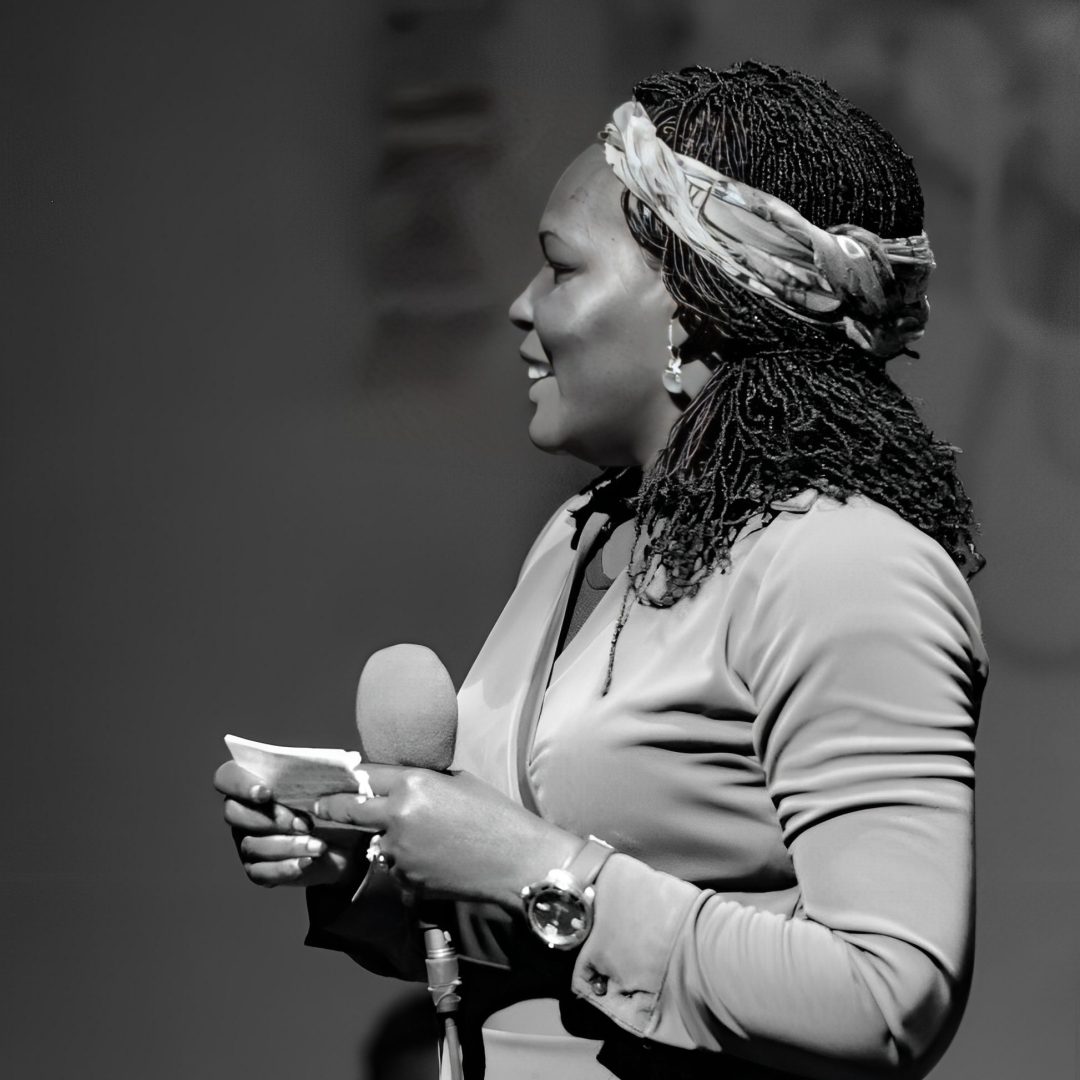
Karak Miakol
From witnessing human suffering to building community-led solutions
A founding story of courage, community, and transformation.
From Mayo IDP Camp to an international community-development organization
Diar Foundation’s story began in 2003 at Mayo IDP Camp in Khartoum, Sudan. Karak Miakol and a group of displaced women came together around a shared conviction: women and communities affected by war, displacement, poverty, and exclusion could organize, lead, and create practical solutions for themselves and their families.
That grassroots movement became the Diar for Rehabilitation and Development Association (DRDA), an indigenous nonprofit and humanitarian organization. Its earliest work was rooted in women’s and children’s rights, education, livelihoods, protection, agriculture, emergency support, and community recovery. From the beginning, the organization’s identity was shaped by local leadership and by the belief that communities should be participants and owners of development, not passive recipients.
As DRDA’s work expanded, the organization developed partnerships and programming beyond its original base in Sudan. South Sudan, Uganda, Kenya, and the United States became part of the organization’s wider institutional and program journey at different stages. These countries came later; the historical starting point remains Mayo IDP Camp in Khartoum, Sudan, in 2003.
In February 2012, the organization established its U.S. nonprofit structure, creating an international platform for governance, fundraising, donor stewardship, partnerships, compliance, communications, and support to locally led work in East Africa. The U.S. headquarters is now based in Colorado.
The organization later adopted the name Diar Foundation while preserving the “Diar” identity and the grassroots legacy of the Diar for Rehabilitation and Development Association. Today, Diar Foundation is strengthening one accountable international organization that connects global relationships and resources with locally rooted leadership, community knowledge, and implementation.
Our next chapter is focused on stronger governance, evidence, sustainability, responsible scale, community ownership, and self-reliance. Growth must never erase the history that began with displaced women organizing together at Mayo IDP Camp.
History
2003 — Founded at Mayo IDP Camp, Khartoum, Sudan, as Diar for Rehabilitation and Development Association (DRDA), emerging from a grassroots movement of displaced women and community members.
2003 onward — DRDA expands community work in women’s empowerment, child protection, education, agriculture, livelihoods, emergency response, youth development, peacebuilding, and community recovery.
February 2012 — The U.S. organization is registered, strengthening the international platform for governance, fundraising, partnerships, and program support.
Later institutional development — The name Diar Foundation is adopted while preserving the “Diar” identity, history, and grassroots mission.
2024–2025 — Diar Foundation reports programmatic work in South Sudan, Uganda, and Kenya, with regional engagement and partnership connections in Sudan.
2026 and beyond — Diar Foundation strengthens its Colorado headquarters, East Africa leadership, governance, evidence, partnerships, community-owned economic pathways, and systems for responsible scale.
Where the Story Began
For Karak Miakol, the Diar Foundation did not begin in an office, a boardroom, or with an international development plan. It began with lived experience.
As a teenager and young woman in Sudan, Karak lived among internally displaced families at Mayo IDP Camp in Khartoum. She witnessed the consequences of war and displacement at close range: women struggling to keep their families together, children growing up with insecurity and limited opportunities, elderly people facing hardship, and families trying to survive after losing homes, livelihoods, and stability.
What she witnessed was painful, but it also revealed something that would shape the rest of her life. The people around her were not without strength. Women organized. Children learned. Families supported one another. People continued to hope, work, and search for ways forward even in extremely difficult circumstances.
Karak came to believe that something had to change—not only the immediate suffering, but also the conditions that kept people dependent, excluded, and without the opportunity to shape their own future.
Something has to change
One experience became a defining moment in Karak’s journey.
A woman named Rebecca, Karak’s friend, was a widow with a newborn baby. She was trying to survive by selling alcohol when the police came to arrest her. Rebecca’s baby was only two days old. Karak could not stand by and watch a mother and her newborn be taken away, so she intervened.
The police took Karak instead.
As she sat in the back of the police truck, frightened and uncertain about what would happen next, she heard children calling after the vehicle.
“Teacher! Teacher! Let our teacher go!”
Among them was James, one of Karak’s students. James was only about ten years old.
As the police truck moved away, James ran toward it and stood facing the vehicle, demanding that the officers release his teacher. For a child to put himself in front of a moving police truck was terrifying. The truck swerved around him and continued toward the prison, while James and the other children became smaller in the distance.
Karak carried that image with her: a child who had very little power in the eyes of the world, yet found the courage to stand in front of authority because he believed that something unjust was happening.
When the truck reached the prison, Karak was ordered to stand aside. In the confusion, a guard quietly told her that no one was watching and that she should go. She moved backward, slipped outside the prison gates, removed her shoes, and ran barefoot through the darkness until she made her way back to the camp.
A community stood together
When Karak returned to Mayo, women and children gathered around her. She told them what had happened—how she had tried to stand for Rebecca, how the children had stood for their teacher, and how James had faced the moving police truck.
That moment became larger than one arrest, one escape, or one act of courage.
It showed what could happen when people who had been treated as powerless recognized their collective strength.
Karak told the women that they could stand together.
In 2003, women at Mayo IDP Camp began organizing. That grassroots movement became the Diar for Rehabilitation and Development Association (DRDA), the organization that would later develop into today’s Diar Foundation.
The lesson was simple but powerful: people experiencing poverty, conflict, and displacement should not be seen only as victims or recipients of assistance. They have knowledge, ability, courage, and leadership. When those strengths are supported with education, skills, productive opportunities, resources, and partnerships, communities can build solutions they increasingly own themselves.
From survival to capability
The early work grew from the realities Karak and the community were living through. Women needed ways to earn income and provide for their families. Adults who had missed education needed literacy and practical knowledge. Children needed protection and opportunities to learn. Young people needed skills and pathways toward productive futures. Families needed food, livelihoods, and stability.
Diar Foundation’s work, therefore, developed beyond immediate relief. Communities organized women’s groups, strengthened livelihoods, developed farms and food-production activities, supported education and vocational learning, worked on child protection and family well-being, and built relationships with partners that could connect local priorities with resources and technical support.
The objective was never simply to do things for communities. It was to strengthen what people could do for themselves and together.
What began at Mayo is what we continue today
More than two decades later, the circumstances and scale of the Diar Foundation’s work have changed, but the principle that emerged from Mayo remains at the center of the organization.
Today, Diar Foundation works to help communities move from vulnerability toward capability, productive opportunity, ownership, resilience, and long-term self-reliance.
We listen to communities and assess local realities. We support education and empowerment. We strengthen practical skills and leadership. We connect people to agriculture, livelihoods, enterprise, savings, markets, and other productive opportunities. We mentor, monitor, learn, and strengthen accountability. Most importantly, we work toward the point where communities have greater responsibility, economic participation, leadership, and ownership of their own progress.
A simple pathway
- Listen & assess
- Empower & educate
- Build skills & leadership
- Connect to productive opportunity
- Mentor & measure
- Strengthen ownership
- Advance self-reliance
Turning what we witnessed into what we build
The suffering Karak witnessed at Mayo is part of Diar Foundation’s history, but it is not where the story ends.
Today, the organization is working to address the very conditions that once seemed overwhelming.
Where Karak saw women struggling to survive without economic opportunity, Diar Foundation works to strengthen women’s skills, livelihoods, enterprise, agriculture, savings, leadership, and economic participation.
Where she saw children affected by conflict, displacement, and poverty, Diar Foundation works through education, youth development, child protection, family well-being, and safer community systems.
Where she saw hunger and families without reliable livelihoods, Diar Foundation works with farmers and communities on food security, sustainable agriculture, productive assets, markets, and locally led economic pathways.
Where she saw young people growing up surrounded by uncertainty, Diar Foundation works to connect youth with learning, vocational skills, entrepreneurship, leadership, and productive opportunities.
Where communities once depended heavily on outside decisions and emergency assistance, Diar Foundation works to strengthen local leadership, community institutions, accountability, ownership, and the capacity to sustain progress.
The work is not finished. Conflict, displacement, hunger, poverty, and inequality continue to affect millions of people. But the organization is no longer responding only to what Karak witnessed as a young woman. It is building practical pathways designed to change those conditions.
From Sudan to a wider community-led mission
Sudan is the mother country and birthplace of Diar Foundation’s grassroots work. The organization later expanded its work and relationships across South Sudan, Uganda, and Kenya, while establishing its international headquarters in Colorado, United States.
The war that erupted in Sudan in 2023 severely disrupted established programs and communities. It did not erase Diar Foundation’s history or commitment to Sudan. The organization continues its connection with Sudanese refugees and displaced communities while looking toward community-led recovery as conditions and resources permit.
From its international headquarters in Colorado, Diar Foundation strengthens governance, partnerships, fundraising, accountability, communications, organizational systems, and resource mobilization. Locally rooted leaders, staff, partners, and communities bring the contextual knowledge, relationships, leadership, and implementation that make the work meaningful on the ground.
The meaning of James’s courage today
Karak has never forgotten James standing in front of that police truck.
That image represents more than a dramatic moment from the past. It represents the courage and agency that Diar Foundation continues to recognize in the people and communities it serves.
James was a child, but he believed his voice mattered. The women at Mayo had experienced enormous hardship, but they discovered that organizing together could create power. Karak had witnessed suffering, but she chose to turn what she had seen into action.
Today, Diar Foundation seeks to turn that same courage into lasting systems of opportunity: a woman able to earn and save; a farmer able to produce and reach markets; a young person able to gain skills and build a livelihood; a child able to learn and grow in greater safety; and a community able to organize, lead, make decisions, and sustain progress.
That is how the organization honors where it came from—not by remaining defined by suffering, but by helping transform the conditions that created it.
Karak’s vision
For Karak, community development is not only about what an organization delivers. It is about what people become able to do, lead, build, earn, manage, and sustain for themselves.
The journey that began at Mayo continues through every community where Diar Foundation works. The goal is dignity. The method is empowerment, capability, productive opportunity, partnership, and local leadership. The destination is greater ownership, resilience, prosperity, and self-reliance.
What Karak witnessed as a teenager and young woman gave her a reason to act. What communities have built since then gives Diar Foundation a reason to continue.
Together, we are turning survival into capability, vulnerability into opportunity, and community courage into lasting transformation.